
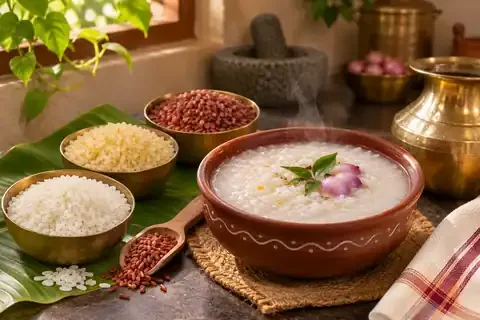
Rice for Porridge: How to Pick the Right Variety for Kanji at Home
The best rice for porridge depends on the texture you want. Raw white rice such as ponni cooks into a smooth, light kanji. Red parboiled rice such as matta makes a hearty, filling bowl, and black kavuni gives a nutty, deeper-flavoured one. Choose the variety first, then match the soaking time and water to it.
Rice porridge is one of the oldest comfort foods in South Indian kitchens. It is soft, easy to season and welcome at breakfast, on rainy evenings and on days when something gentle is needed. Choosing the right rice for porridge determines the thickness, the cooking time, and the taste.
What is rice porridge called in India?
Rice porridge is called kanji in Tamil, ganji in Telugu and Kannada, and pej in Bengali. The English word congee describes the same idea: rice simmered in extra water until the grains split and the liquid turns creamy.
In most homes, kanji is a thin to medium-thick bowl that can be sipped or eaten with a spoon. Thickness is a personal choice, and it changes with the rice and the water you use.
What makes a rice good for porridge?
Three things shape the result: the variety, the grain size, and whether the bran is still on. Keep them in mind when picking rice for porridge at home.
- Variety: A 2021 study in the Korean Journal of Food and Nutrition compared porridges made from 16 rice cultivars. Viscosity, hardness, and gumminess differed clearly between them, with some porridges staying under 20,000 cP and others crossing 50,000 cP. Each variety therefore has its own natural texture.
- Grain size: Broken or smaller grains soften quickly, so they cook into a smooth kanji in less time.
- Bran: Polished white rice has the bran removed and softens fast. Unpolished red and black rice keep the bran, which calls for a soak, extra water, and a longer cook, and rewards the effort with a chewier, nuttier bowl.
Which Rice for Porridge Gives the Texture You Want?
The best rice for kanji varies by household, so the three families of grain below cover the common choices.
Raw white rice (pacharisi) for a smooth, light kanji
Raw white rice such as ponni is the everyday choice for a thin, smooth bowl. The polished grain softens quickly, and extra water turns it into a silky kanji.
Thooya malli rice is a Cauvery delta variety with a Geographical Indication tag, and its slender grains carry a light jasmine-like fragrance. That makes it a pleasant base for a plain kanji finished with a little ghee.
A workable starting point is 1 part white rice to 6 parts water, simmered until the grains split and the porridge looks creamy.
Red parboiled rice (puzhungal arisi) for a hearty bowl
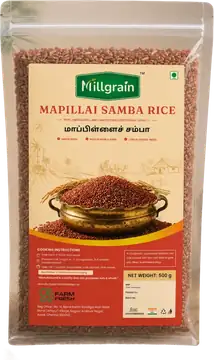
Unpolished red parboiled rice such as Kerala matta keeps its bran, so the kanji feels more filling and the grains hold their shape well while cooking. That makes it a dependable rice for porridge when a substantial bowl is wanted. Matta rice benefits from a 30- to 45-minute soak.
Another red variety suited to porridge is mappillai samba rice, which needs a longer soak of 4 to 6 hours before cooking. A soak the evening before suits a next-morning kanji.
Red and black varieties sit naturally beside other whole grain staples in a traditional kitchen, and rotating among them keeps the weekly menu varied.
Black kavuni rice for a deeper flavour
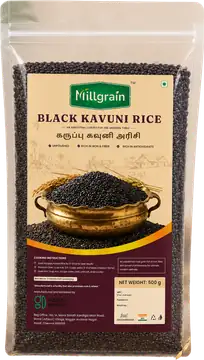
Karuppu kavuni rice, the black rice of Tamil Nadu, has a nutty taste and a firm, slightly chewy bite. Its dark colour comes from anthocyanins in the bran layer, and a 30 to 60 minute soak helps it soften. The nutrition side of this grain is covered in kavuni rice benefits, which helps when deciding how often to cook it.
Idly rice and other batter rice
Idly rice is parboiled and selected for batter fermentation, so it is best kept for idli and dosa. For a bowl of kanji, one of the varieties above gives the texture described here.
How do you cook rice kanji so it turns creamy?
The method is the same for whichever is the best rice for kanji in your kitchen. Only the soak and the water change.
- Rinse the rice 2 to 3 times until the water runs clear.
- Soak to suit the variety: white rice about 15 to 20 minutes, matta 30 to 45 minutes, kavuni 30 to 60 minutes, mappillai samba 4 to 6 hours.
- Add water generously. Start with 1 part white rice to 6 parts water, or 1 part red or black rice to 8 parts water, then adjust in the next batch.
- Cook on a gentle simmer, or in a pressure cooker for 4 to 5 whistles for the red varieties, until the grains split.
- Mash lightly with the back of a ladle for a creamier body.
- Season at the end: a pinch of salt and buttermilk for a savoury bowl, or jaggery and coconut milk for a sweet one.
What if mornings are too busy for soaking?
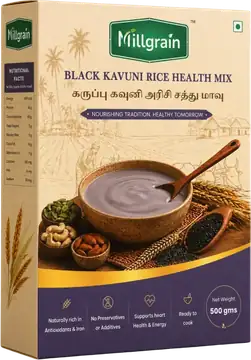
Soaking and simmering need planning, and some mornings leave little room for either. A ready-to-cook mix covers those days. The karuppu kavuni rice kanji mix is cooked by stirring 2 to 4 tablespoons into water or milk for 5 to 10 minutes, according to its product page.
If you want more ready-to-cook options, you can look through the instant congee mix range.
How do you keep rice porridge varied and suitable for the family?
Rice is a staple in most Indian homes, and a varied plate keeps the weekly menu interesting. Rotating between rice, millets, and other grains is easier when they sit in one range, such as the Pure Organic foods at gdfarmfresh, and keeping portions suited to the age of the person eating is a simple habit that works well. Please speak to a paediatrician before choosing a first grain for an infant, and to a doctor or dietitian when managing diabetes or a digestive condition.
Quick Tips
- Kanji thickens as it stands, so loosen it with a little hot water before serving.
- Toast the dry rice for a minute before adding water for a nuttier aroma.
- Mix half white and half red rice for a texture between smooth and hearty, handy when the family likes different bowls.
- Leftover cooked rice can be simmered with extra water and mashed into a quick kanji.
- Match toppings to the grain: pickle or papad with white rice kanji, coconut chutney with red rice kanji.
Frequently asked questions
Which rice for porridge suits a baby’s first kanji?
The choice belongs to the child’s paediatrician, who will advise on timing and grain. Rice is one option among several first grains, so varying grains across the week is a sensible approach.
Why does my rice kanji turn gluey, and how do I fix it?
Gluey kanji usually means the water was too little for the grain or the rice was stirred hard while hot. Loosen it with hot water, stir gently, and raise the water by one part in the next batch.
Do red rice varieties like matta need soaking for kanji?
Soaking softens the bran and shortens the cooking time, which makes red rice a friendlier rice for porridge. Matta rice takes about 30 to 45 minutes, while mappillai samba takes 4 to 6 hours, so an overnight soak works well for the second.
Can I add ulundhu (urad dal) to rice kanji?
Many homes cook ulundhu kanji as a separate porridge, and a spoonful of roasted urad dal flour can be stirred into rice kanji for a creamier body.
Is it better to rotate rice kanji with millet kanji?
Rotating grains keeps meals varied, and the best rice for kanji can change with the week’s menu. The difference in nutrition and cooking between the two is laid out in millet vs rice.